|
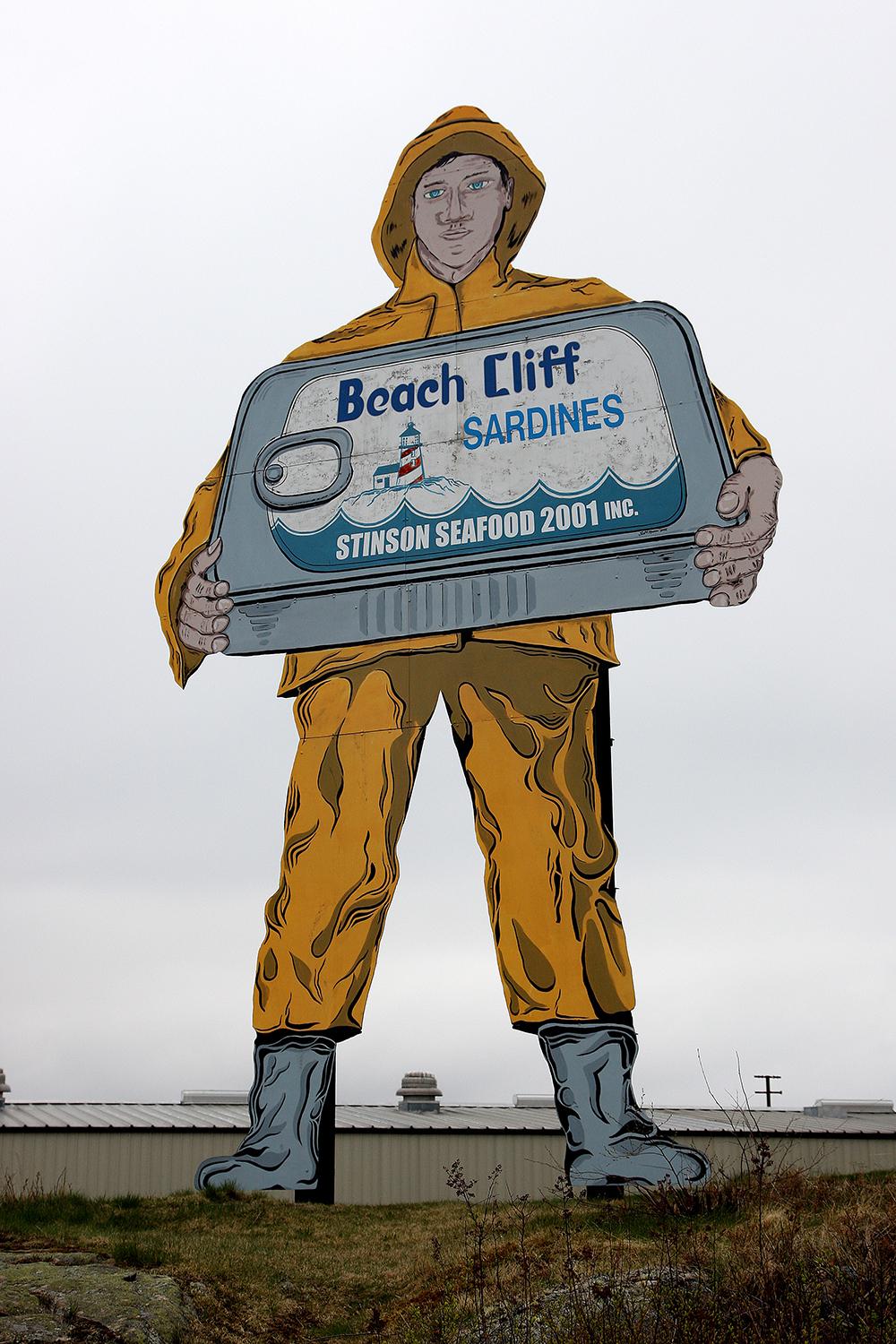
Maine has its fair share of roadside attractions. There is a giant blueberry in Jonesport, an LL Bean boot in Freeport, and a Paul Bunyan statue in Bangor, to name a few. The 40' tall sardine fisherman (currently holding a lobster trap) in Prospect Harbor stands out among these landmarks. In 1959, when Big Jim was initially erected on Route 1 in Kittery, it was a welcoming beacon for all visitors coming to Maine. This memory still resonates with many people who visited the state before I-95 became the preferred route. While its purpose was to advertise Maine sardines, it came to represent the pride of the industry and the tens of thousands of people who worked in it over a century.
The first time Big Jim was “saved” was in the late 1960s, when the state decided to remove him from Kittery, and the owners of the Stinson Canning Factory requested he be moved to their Prospect Harbor location, where the statue has stood ever since. When he was moved, the original wooden version--much deteriorated--was replicated in aluminum. It was serendipitous that of all the sardine canneries on the Maine coast, it went to the one that was last to close. Photos of Big Jim accompanied all the major news stories that documented the last days of the last cannery in 2010. It was an icon of the once thriving sardine industry. Since that time, Big Jim has been repeatedly altered, and the effects of weather and time have taken a toll.
PMM wants to bring him back to his original glory as a reminder of a once prosperous fishery and the economy it spurred, and as a tribute to all those who worked in the canneries, the communities that grew up around them, and on the boats. As we tell the story of the sardine era in our exhibit Sardineland, Big Jim will once again act as a beacon on Rt. 1 here on the PMM grounds in Searsport, before going back home to Prospect Harbor.
Please consider supporting this effort! Since our campaign to raise the funds began, we have received donations from around the country including Alaska, Minnesota, Florida, North Carolina, Ohio, Massachusetts, and of course, Maine. We still have a ways to go, so help us spread the word. Every donation helps! Thank you!
|