

Penobscot Bay and River create an economic region defined by water and proximity to the ocean. Until the early 1900s, residents along the Bay relied on water as a road to the world. Even today, cargoes shipped to Searsport, Maine’s second largest seaport, help meet our energy and industrial needs.
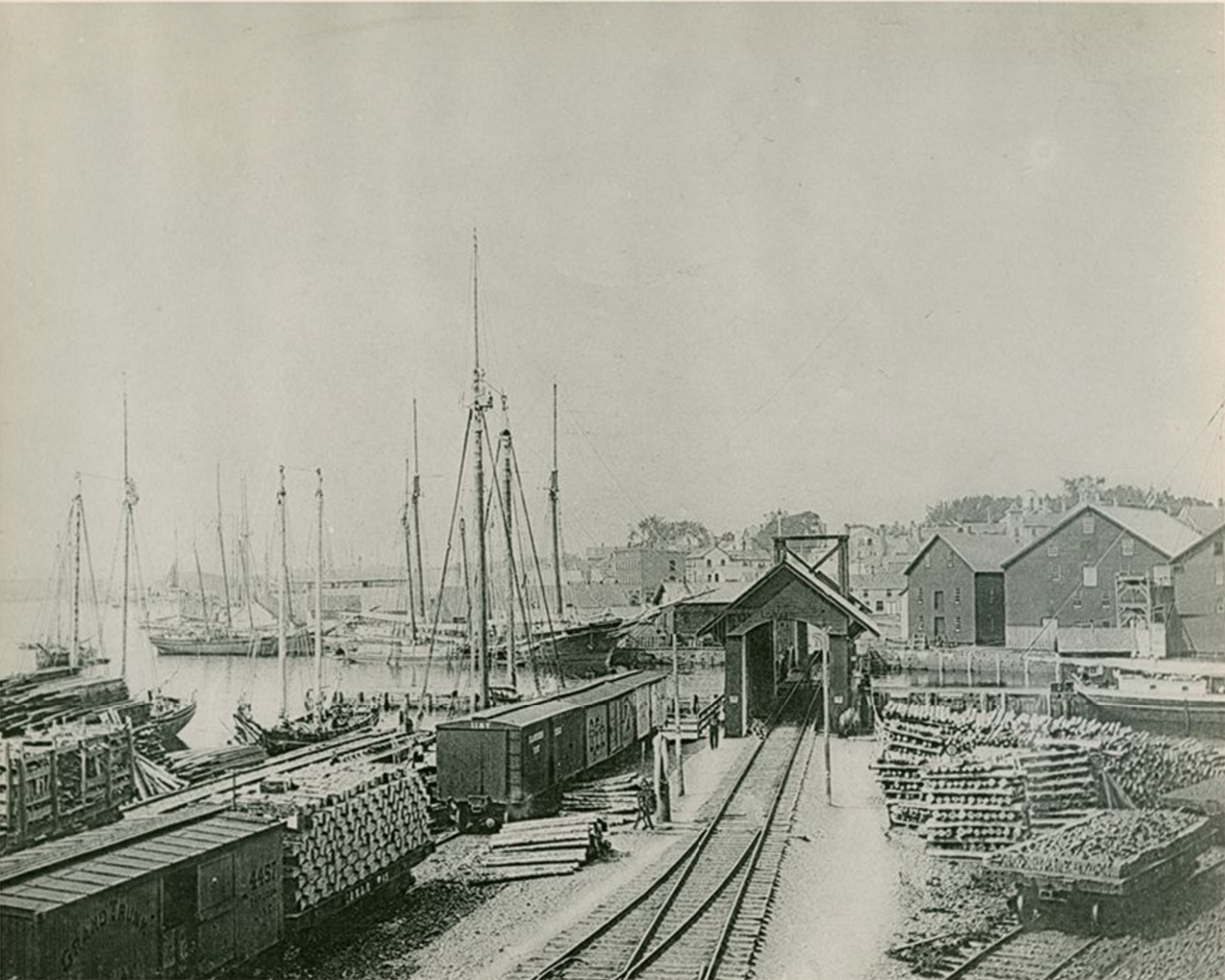
Bangor, Maine waterfront at mouth of Kenduskeag Stream in 1880. (Paul Stubing Collection, LB2010.15.22.)
For hundreds of years, the Penobscot Bay area’s geography and natural resources provided the basis for its economic growth, industrial progress, and community development. Shipping and shipbuilding industries would not have developed without the resources in and around the Bay and the Bay’s protected harbors. Natural resources encouraged the growth of local industries, which then encouraged a strong marine transportation industry, the cornerstone of our maritime history.
Many of Penobscot Bay’s industries peaked in the nineteenth century. By the 1850s, Bangor was a busy port and sometimes called the Lumber Capital of the World. Rockland’s lime, used in plaster and mortar, helped build New York City. Quarries in the town of Penobscot provided granite for buildings in the large cities of the East Coast and the Midwest. Maine occasionally topped Massachusetts in catching the most fish of any state. These and other industries are part of our story of “Working the Bay.”